Whoa! That first time I cracked open a Solana transaction I felt like a detective. My instinct said, “This is fast, but where’s the trail?” I was half right. Solana moves quickly—finality in seconds—but the trail exists if you know where to look, and somethin’ about piecing it together is oddly satisfying. I’m biased, but if you care about on-chain clarity you should care about the tools and patterns that make sense of the noise.
Short story: explorers matter. Really? Yes. An explorer that surfaces inner instructions, parsed logs, token account flows, and holder distributions saves you hours. Initially I thought raw RPC queries would be enough, but then realized a well-built UI that connects program IDs to readable events changes the game. Actually, wait—let me rephrase that: the UI doesn’t replace understanding, but it focuses your analysis so you can dive deeper where it counts.
Here’s the thing. On Solana, a single user action can spawn multiple inner instructions and cross-program invocations. That makes transaction pages both fascinating and noisy. Hmm… sometimes the logs look like spaghetti. On one hand the TPS and cheap fees are amazing. On the other hand the complexity of composable programs means you need better visibility than “lamports moved from A to B.”
How I use an explorer day-to-day — and why you should too
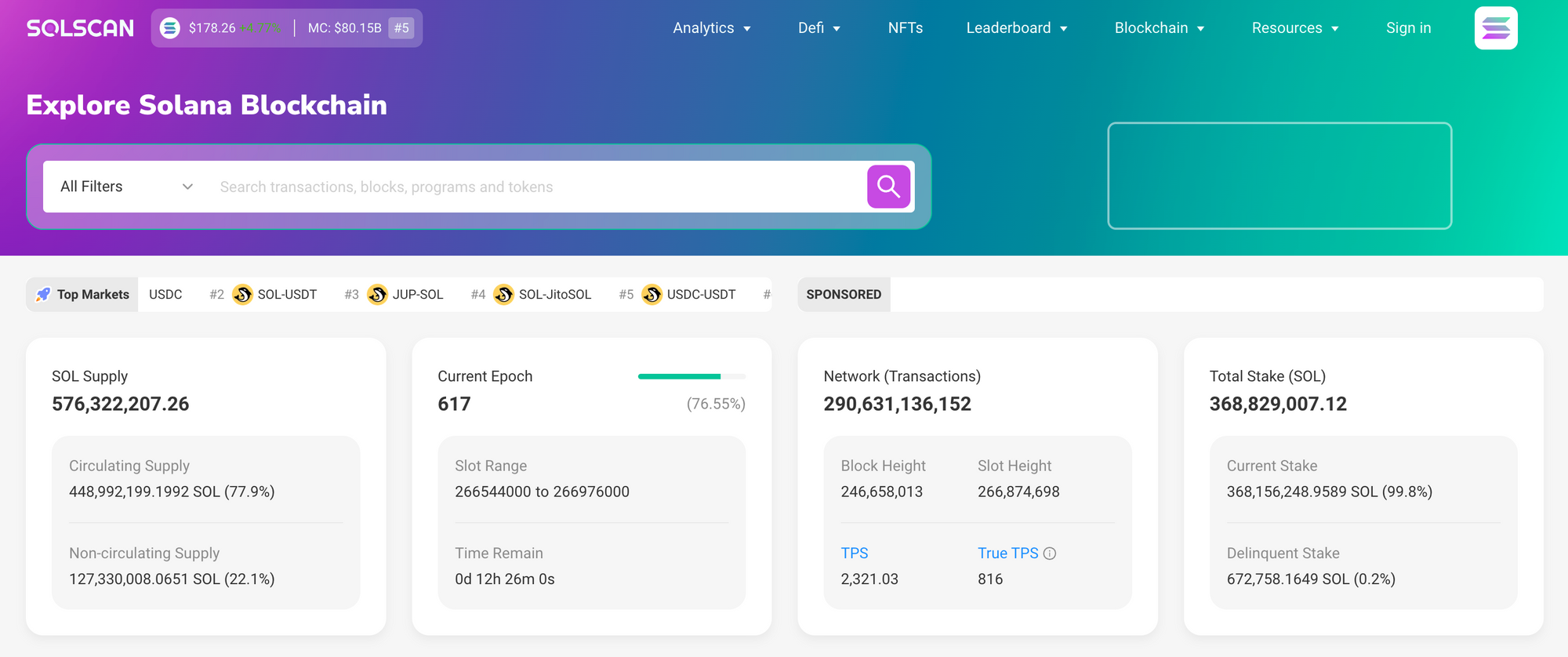
Okay, so check this out—when I’m vetting a token or tracing a suspicious transfer I follow the same steps. First, grab the transaction signature or token mint address. Then I open the explorer and look at the parsed transaction view. The decoded instructions tell you which program executed, the sequence of cross-program calls, and often the pre- and post- balances that reveal where funds moved. For that kind of speed and clarity I often reach for solscan because it surfaces holders, mint data, token transfers, and inner instruction parsing in one place.
Step two is token accounts. Solana’s SPL tokens use token accounts per wallet. That matters because a wallet holding many tokens will have many token accounts. If you want to see actual token flows, watch the token account updates—those show exactly which token account balance increased or decreased. This is very very important when you’re auditing an NFT mint or a liquidity migration.
One method I use when suspicious activity shows up: follow the lamports. Not glamorous, but effective. Check pre/post balances for system program transfers. Then you cross-check the instruction list for CPI (Cross-Program Invocation) calls—these often point to program IDs that handle swaps, staking, or custom logic. If a mint authority moves or a freeze authority executes, it’ll show up in the token’s mint info. That header data is gold when you’re trying to determine whether a token is ruggable or immutable.
There are subtle signals too. For example, a sudden spike in creation of associated token accounts can indicate airdrop bots or a mass buy event. Conversely, a quiet but steady drain from many holders might signal a stealthy redistribution. In NYC I watched a DeFi launch where the mempool was basically a stampede—fun to watch, stressful to trade in. Those patterns repeat, though, and once you’ve seen them you start recognizing the signatures of different behaviors.
Technical tip: use the “token tracker” features to monitor holder concentration and supply changes. A top-10 holder holding 80% is a red flag. If the contract allows minting after the public sale, that also flags risk. The token tracker should show current supply, historical mints/burns, and links to holder addresses so you can inspect associated activity. When you see on-chain minting events tied to a known deployer wallet, pause. Seriously? Yes—research that deployer.
Another quick win is using filters and time ranges. Want to know whether a spike was organic or bot-driven? Filter transfers by amount and look at timestamps. If 1,000 similar transfers happen in sub-second bursts, it’s likely bots or automated scripts. If transfers are staggered and correlated with social announcements, that looks organic. On the flip side, watch for obfuscated multi-hop transfers where funds are moved through several program accounts to hide origin. That stuff bugs me—it’s sneaky, but discoverable.
Let’s talk about inner instructions and logs for a sec. They’re not pretty, but they matter. Inner instructions reveal CPI targets and can show where a swap or liquidity add actually executed. Read the logs top-to-bottom. They often include program-emitted events with helpful strings. Initially I skimmed them and missed critical pieces, though actually, after a few deep dives I started extracting recurring markers that signaled specific protocols—like how a Serum cancel/settle sequence looks versus an AMM swap.
Practical checklist when analyzing a token or tx:
- Get the mint address and examine mint authority, freeze authority, and total supply.
- Open the holders tab. Look for concentration and newly created token accounts.
- Trace large transfers via transaction history and inspect inner instructions for CPIs.
- Cross-reference program IDs to known protocol lists (DEXs, bridges, staking programs).
- Check for recent mints or burns and link them to deployer addresses.
I’m not 100% sure every pattern means fraud. Context matters. On one hand a big whale dump can be profit-taking. On the other hand it can precede coordinated manipulation. My approach is probabilistic—weight the signals, not just the headlines. Also: watch the fees. Even though Solana is cheap, sudden spikes in transaction fees or priority lock-ups can indicate network stress or frontrunning attempts.
Quick FAQ
How do I find token transfers for a specific wallet?
Search the wallet address, then filter the transaction history by “token transfers” or inspect token accounts tied to that wallet. Token-specific pages often list associated token accounts so you can see incoming/outgoing transfers at the SPL level.
What shows a token is likely mutable or risky?
Look at the mint authority and the ability to mint after launch, check for a freeze authority, and examine the holder distribution. If a small set controls most supply or if the mint authority is still active, treat with caution.
Can I rely solely on explorers for forensic work?
Explorers are powerful, but combine them with RPC queries, program source (if available), and community intel. On-chain data tells a lot, but sometimes off-chain coordination explains otherwise puzzling movements.
Okay—final thought, though I won’t tie it up like some neat summary. Observing chains is a bit like birdwatching. You learn to recognize calls and flight patterns. Sometimes you misidentify a species. Sometimes you get lucky and spot somethin’ rare. Use the tools, read the logs, and trust your instincts, but verify with data. If you need a place to start with solid token tracking and readable transaction pages, give the explorer linked above a spin. It won’t do your thinking for you, but it will put the right clues front and center.